Dunblane Cathedral
North of Stirling on the banks of the Allan Water
Select the thumbnails to view in full size
All images are © 400photos.uk
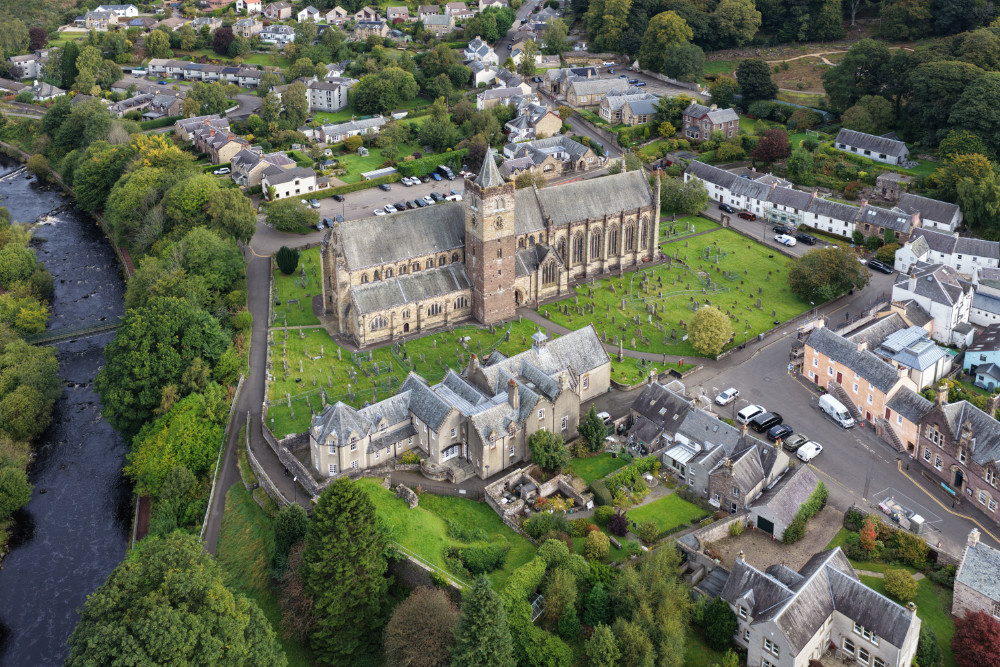
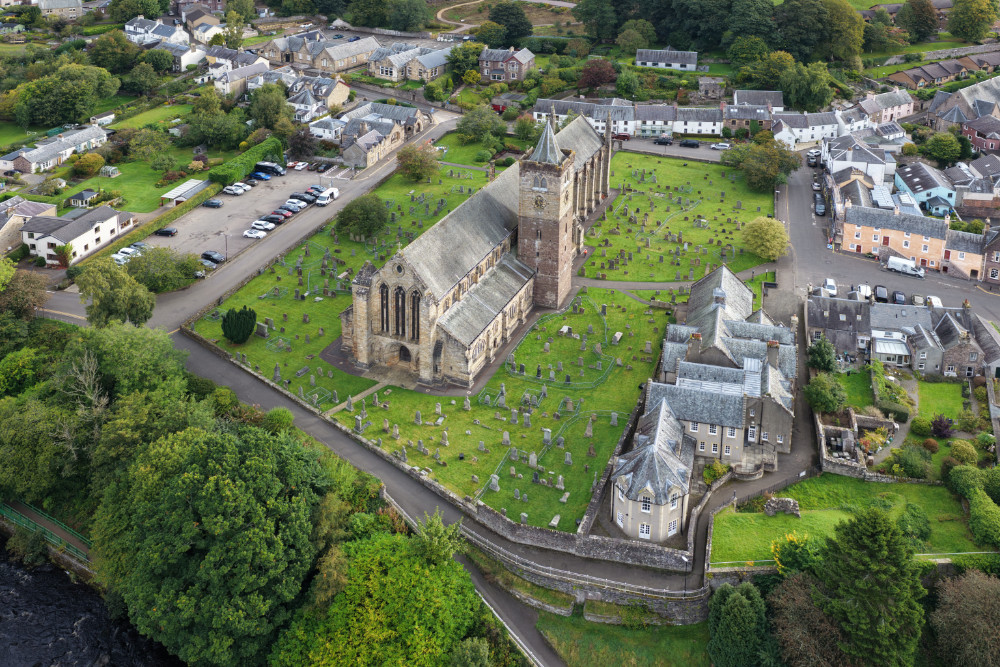
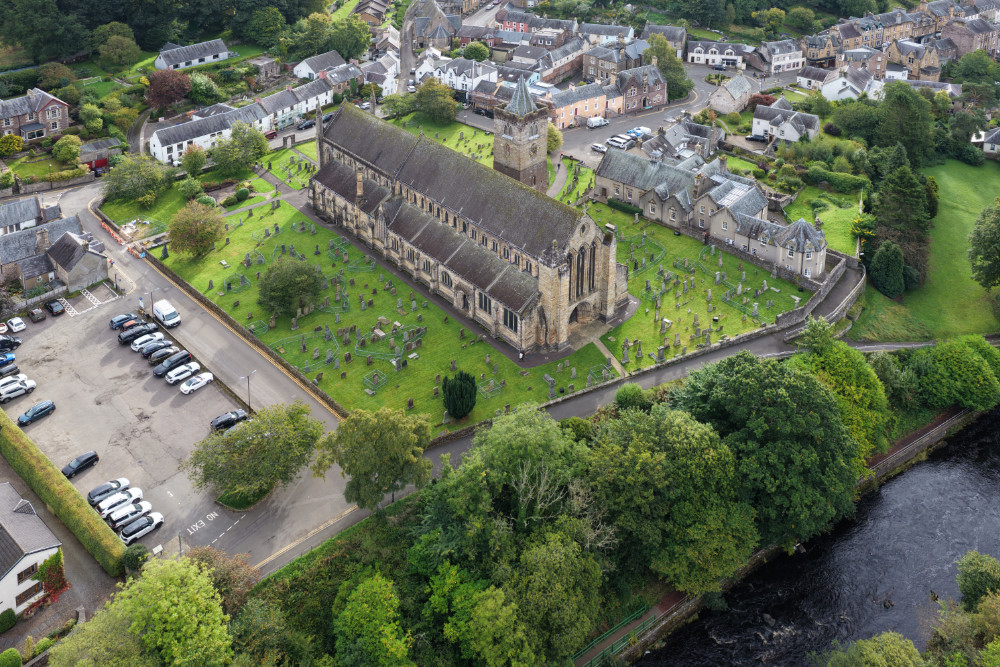
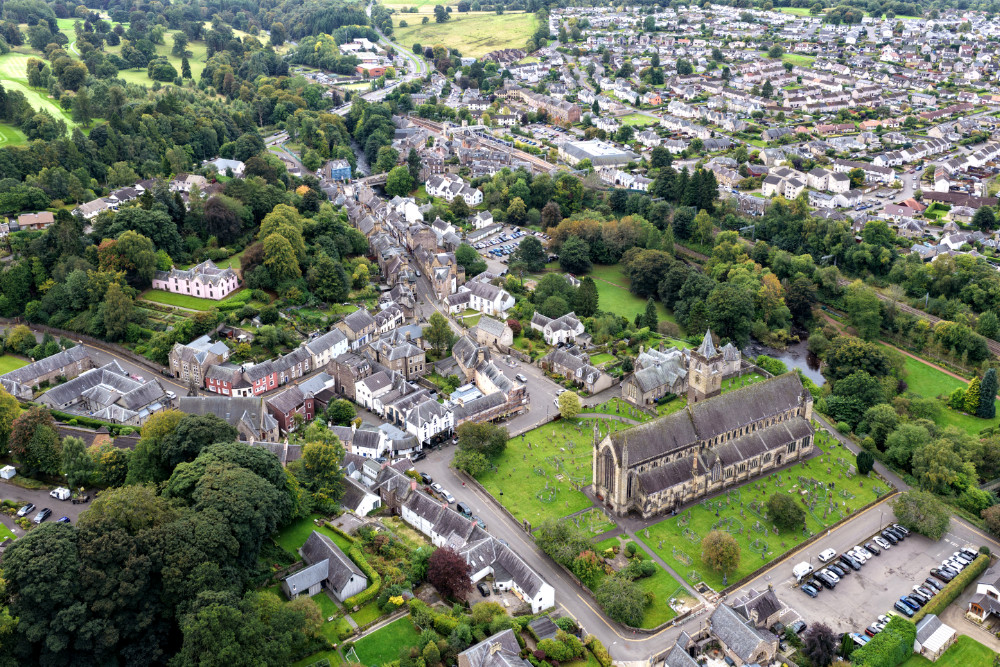
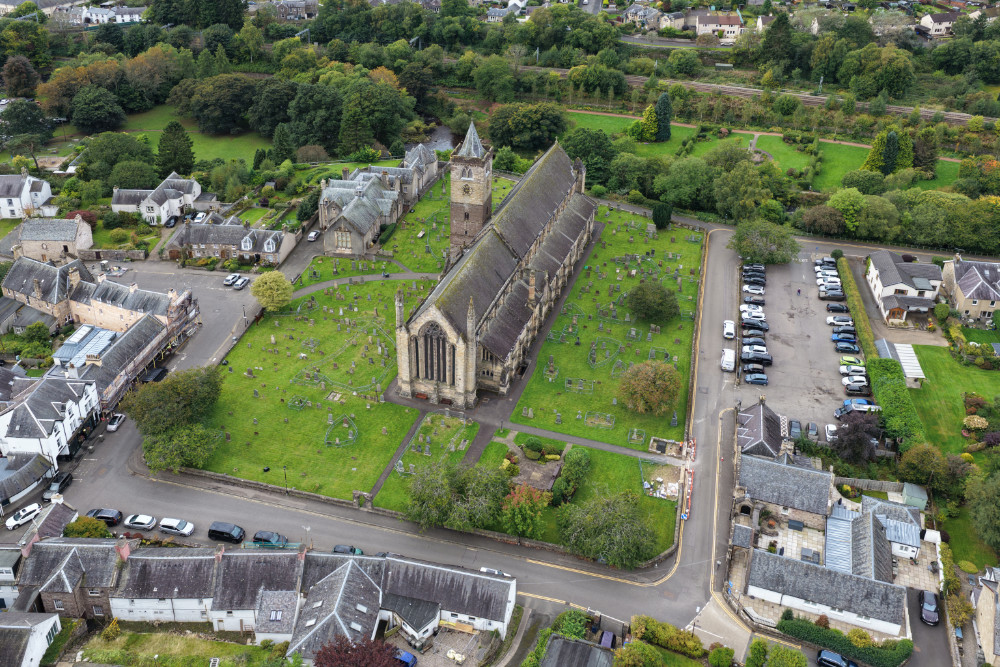
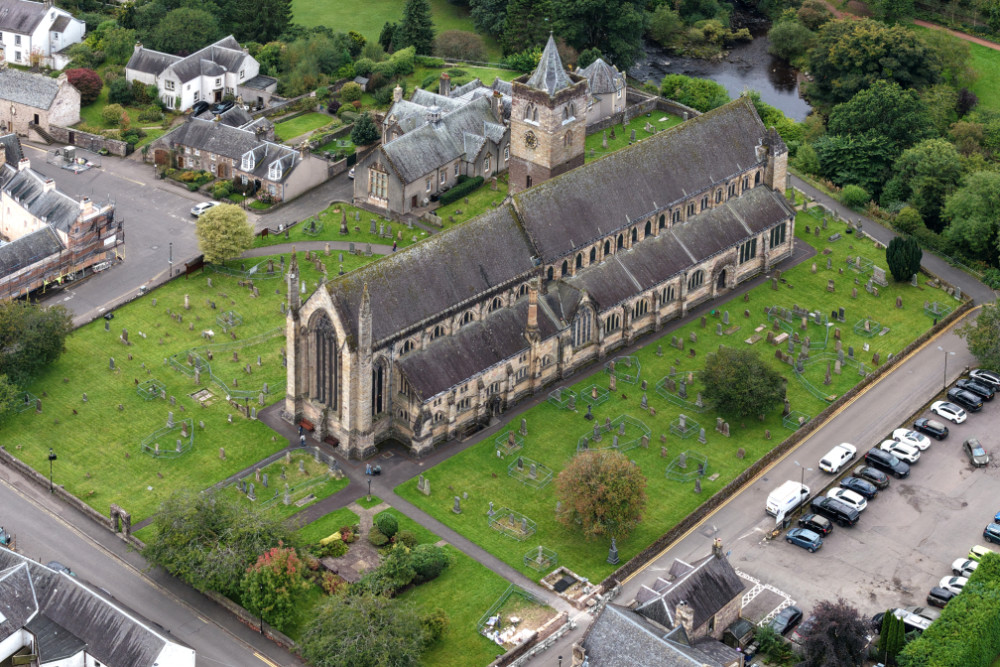
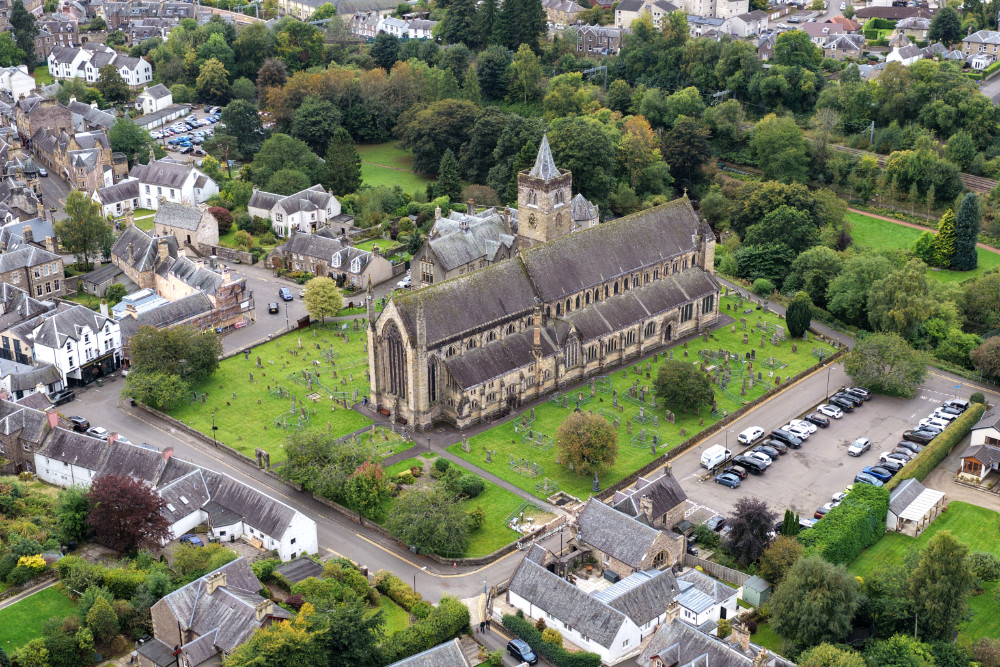
Dunblane Cathedral is one of Scotland finest medieval churches.
The approach from the south up the Main Street to The Cross allows a fine view of the cathedral coming into view at the top of the hill and on the way you pass the Royal Mail Golden Post Box in recognition of Sir Andy Murray, tennis legend and Olympic Gold Medal winner, who comes from Dunblane.
The first view is from the south, the cathedral being built slightly south of west to a little north of east.
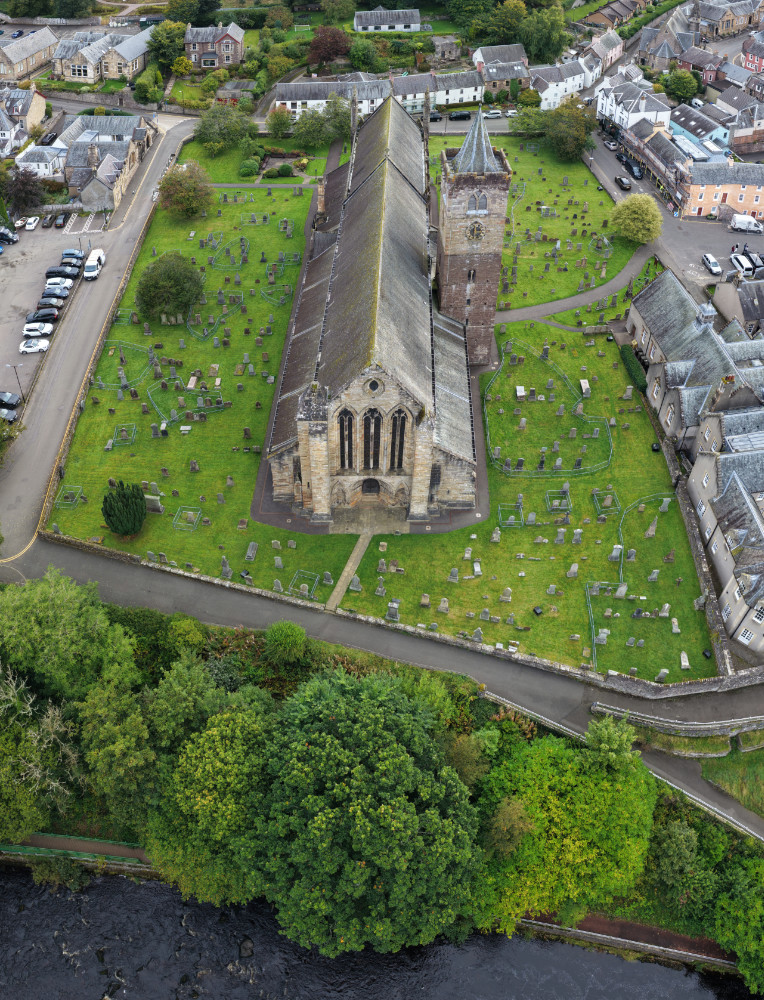
Between the cathedral and the river is a park alongside the Allan Water and shown in some of the photos. The river is a tributary of the Forth, joining it just north of Stirling, to the south.
The original 4-storey tower dates back to the early 1100s and a church was then added alongside it in the 1200s. The top section of the tower (in a different coloured stone) is much later.
The cathedral had no roof on the nave for over 300 years and the internal walls are nicely weathered as a result. Choir stalls from the 1400s and a Gothic processional doorway (at the western end by the river) some very impressive stained glass and a well cared for pipe organ add to the interest.
The cathedral is in the hands of Historic Environment Scotland and is a working church as well as a popular tourist site. Disabled access is easy, parking nearby is free.
The approach from the south up the Main Street to The Cross allows a fine view of the cathedral coming into view at the top of the hill and on the way you pass the Royal Mail Golden Post Box in recognition of Sir Andy Murray, tennis legend and Olympic Gold Medal winner, who comes from Dunblane.
The first view is from the south, the cathedral being built slightly south of west to a little north of east.
Between the cathedral and the river is a park alongside the Allan Water and shown in some of the photos. The river is a tributary of the Forth, joining it just north of Stirling, to the south.
The original 4-storey tower dates back to the early 1100s and a church was then added alongside it in the 1200s. The top section of the tower (in a different coloured stone) is much later.
The cathedral had no roof on the nave for over 300 years and the internal walls are nicely weathered as a result. Choir stalls from the 1400s and a Gothic processional doorway (at the western end by the river) some very impressive stained glass and a well cared for pipe organ add to the interest.
The cathedral is in the hands of Historic Environment Scotland and is a working church as well as a popular tourist site. Disabled access is easy, parking nearby is free.