Fife Ness Harbour & Tide Mill
By Balcomie, a mile or so east of Crail in the East Neuk of Fife
Select the thumbnails to view in full size
All images are © 400photos.uk
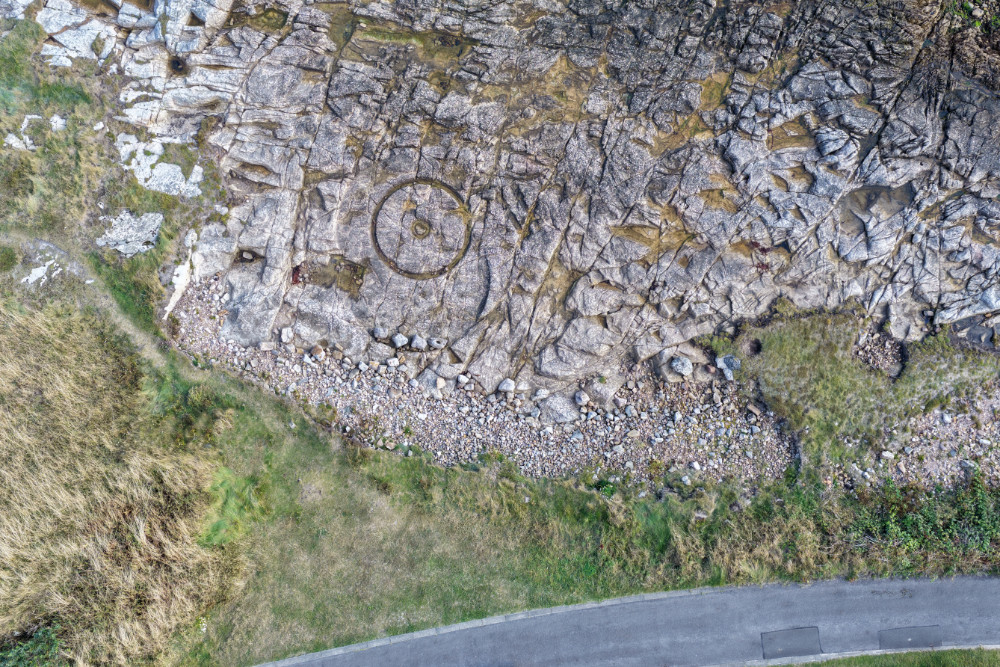
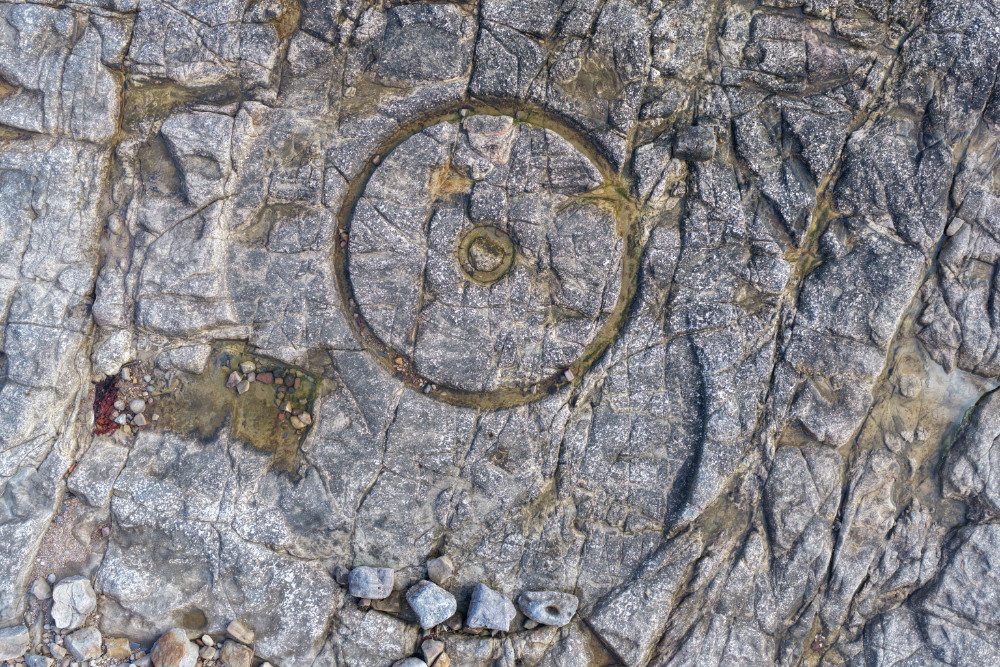
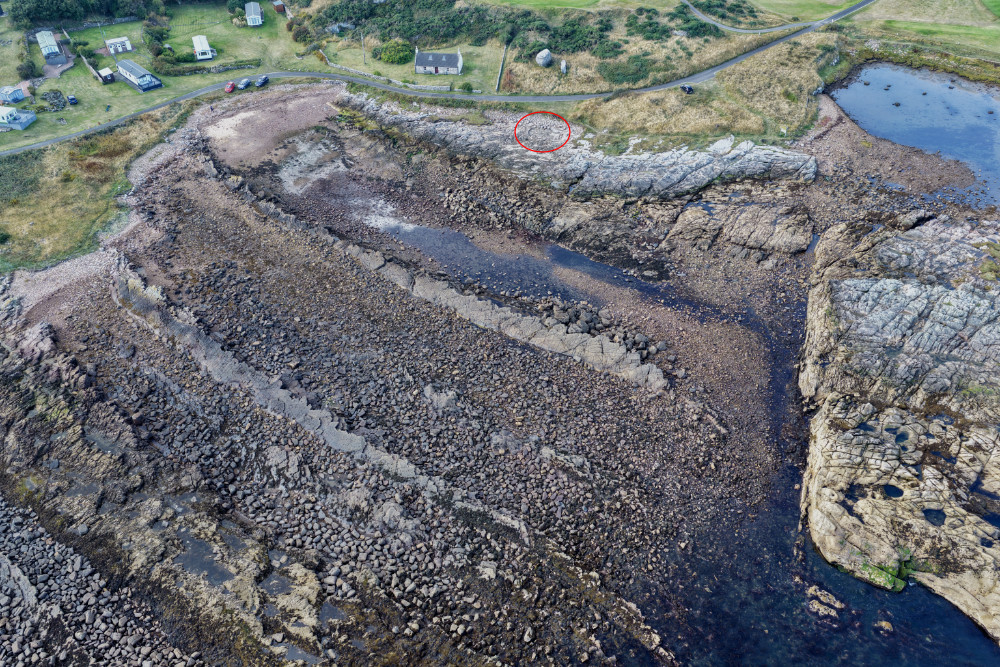
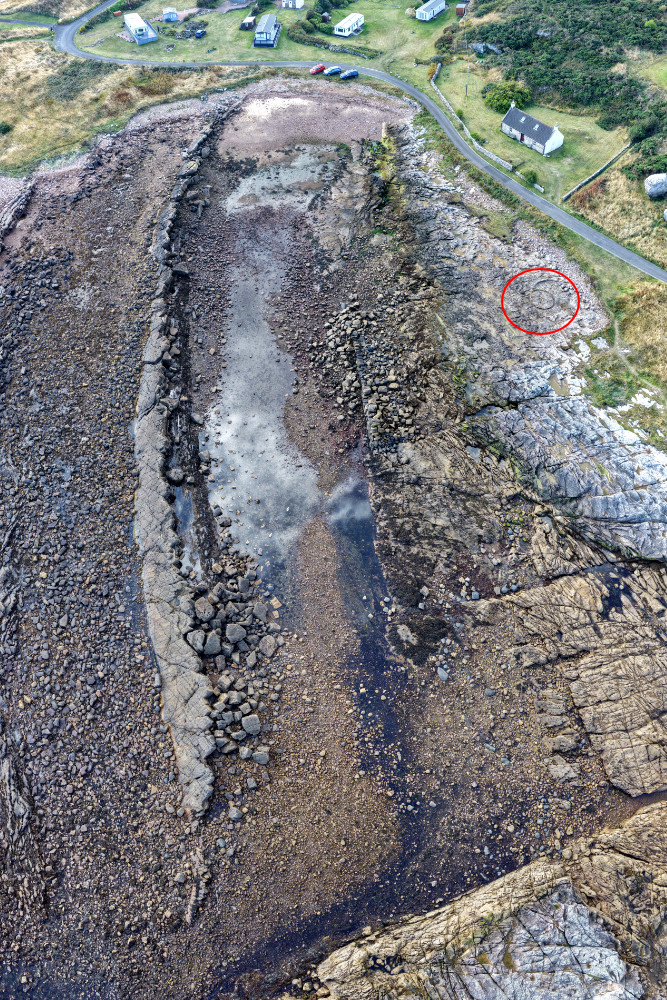
Most of the old harbour walls are now lost to the sea. The rings cut into the rock were
used as a construction guide for the North Carr Beacon, a mile and a half offshore, built by
Robert Stevenson in 1813-1816.
The larger complete ring is just under three metres across. Bearing in mind these were cut over two hundred years ago (and that must in itself have taken a massive effort) they're still in immaculate condition.
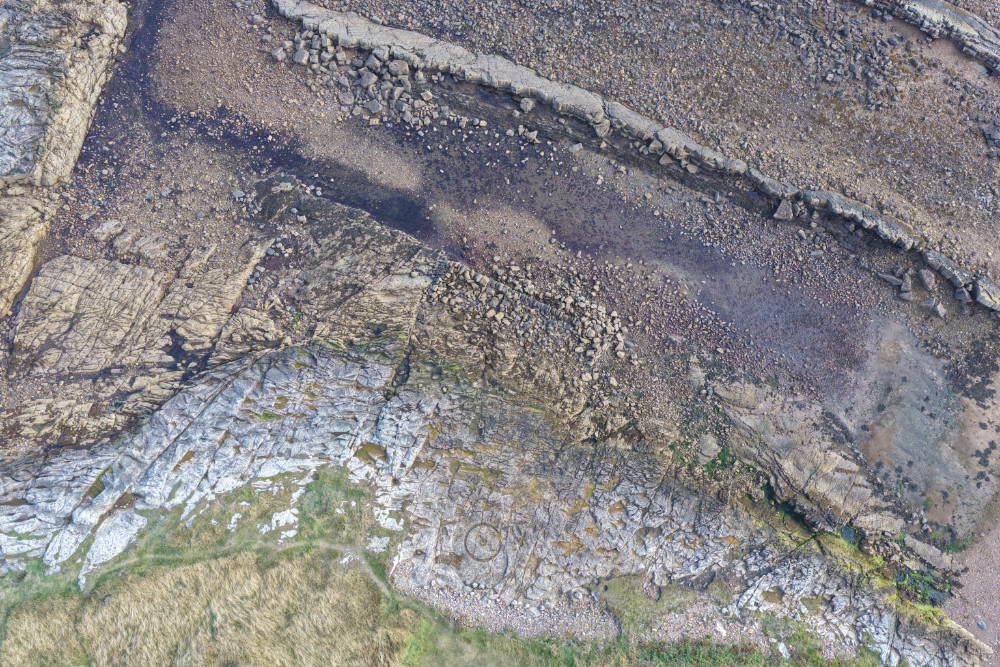
The harbour is shown at low tide to help illustrate the poor condition of the walls. Entry was by way of a sharp turn to the left and must have been a bit challenging when the wind or tide were against.
The offshore views have the rings marked in red, for clarity.
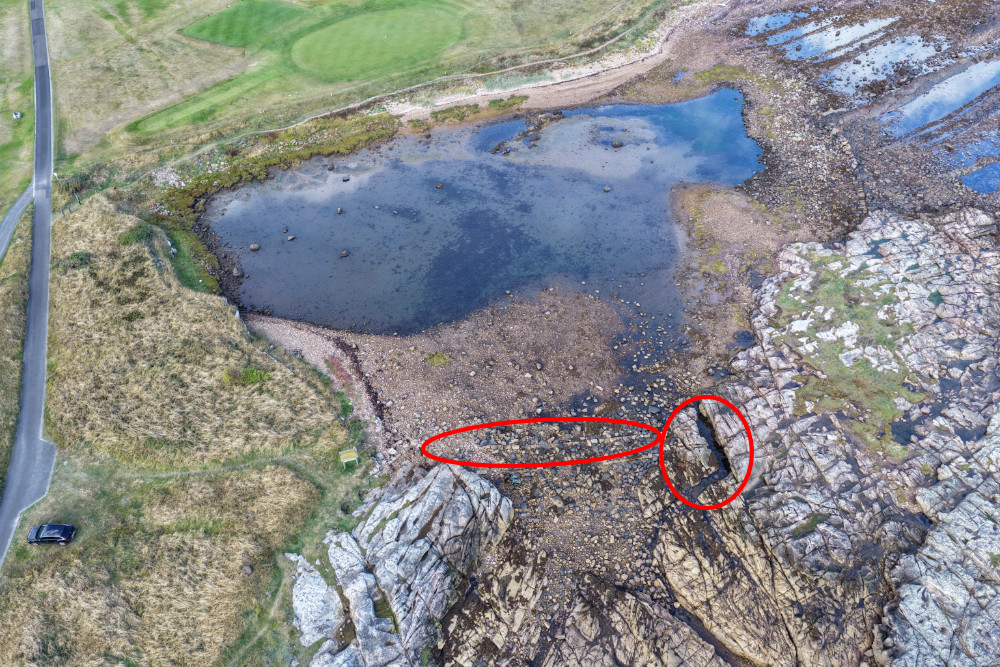
The final photograph is of all that remains of the Fife Ness Tide Mill. A simple idea, use the rise and fall of the tide to fill a pond with seawater and then use that to power a water-wheel. The remains of the sluice gate across the entrance to the supply pond and the channel cut into the rocks for the water-wheel are marked in red, for clarity.
Dates are a bit vague but it was certainly in operation as a corn mill around 1793 and earlier.
The larger complete ring is just under three metres across. Bearing in mind these were cut over two hundred years ago (and that must in itself have taken a massive effort) they're still in immaculate condition.
The harbour is shown at low tide to help illustrate the poor condition of the walls. Entry was by way of a sharp turn to the left and must have been a bit challenging when the wind or tide were against.
The offshore views have the rings marked in red, for clarity.
The final photograph is of all that remains of the Fife Ness Tide Mill. A simple idea, use the rise and fall of the tide to fill a pond with seawater and then use that to power a water-wheel. The remains of the sluice gate across the entrance to the supply pond and the channel cut into the rocks for the water-wheel are marked in red, for clarity.
Dates are a bit vague but it was certainly in operation as a corn mill around 1793 and earlier.