Laigh Milton Viaduct
Near Kilmarnock, this is the first railway viaduct on the planet
Select the thumbnails to view in full size
All images are © 400photos.uk
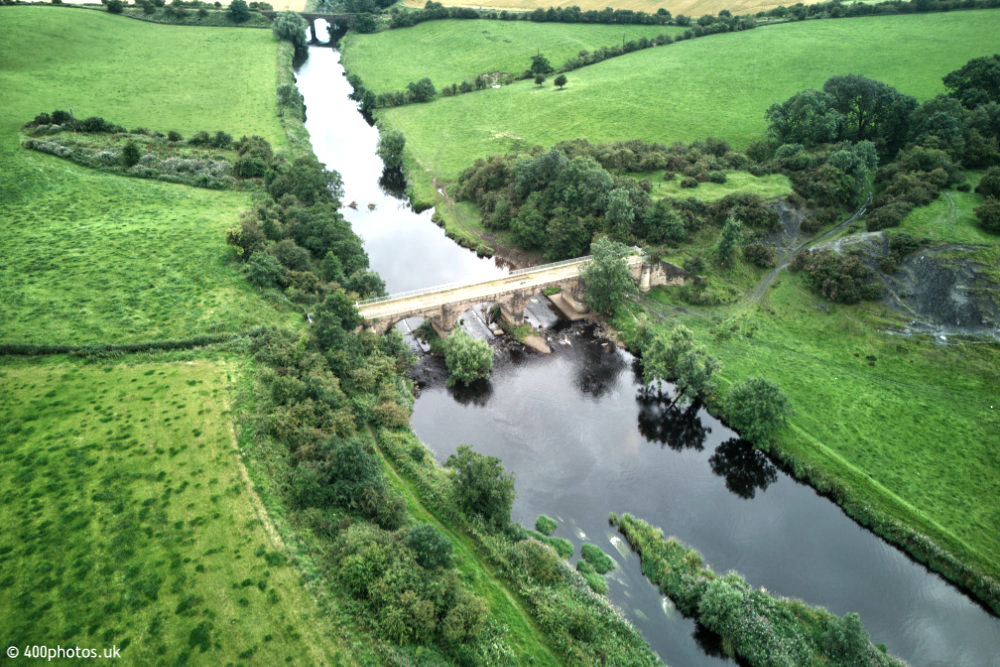
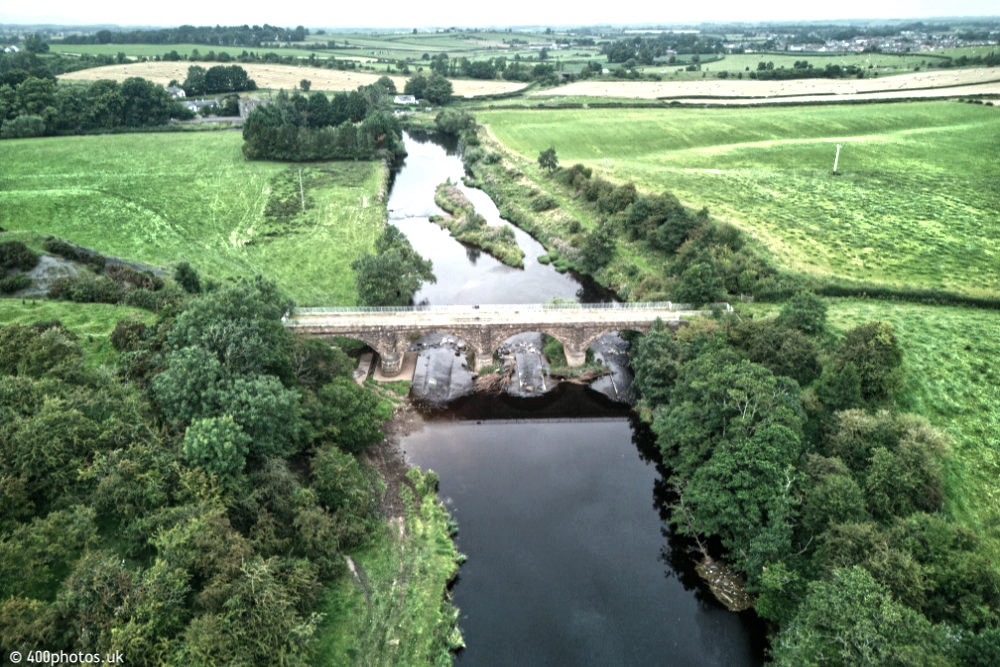
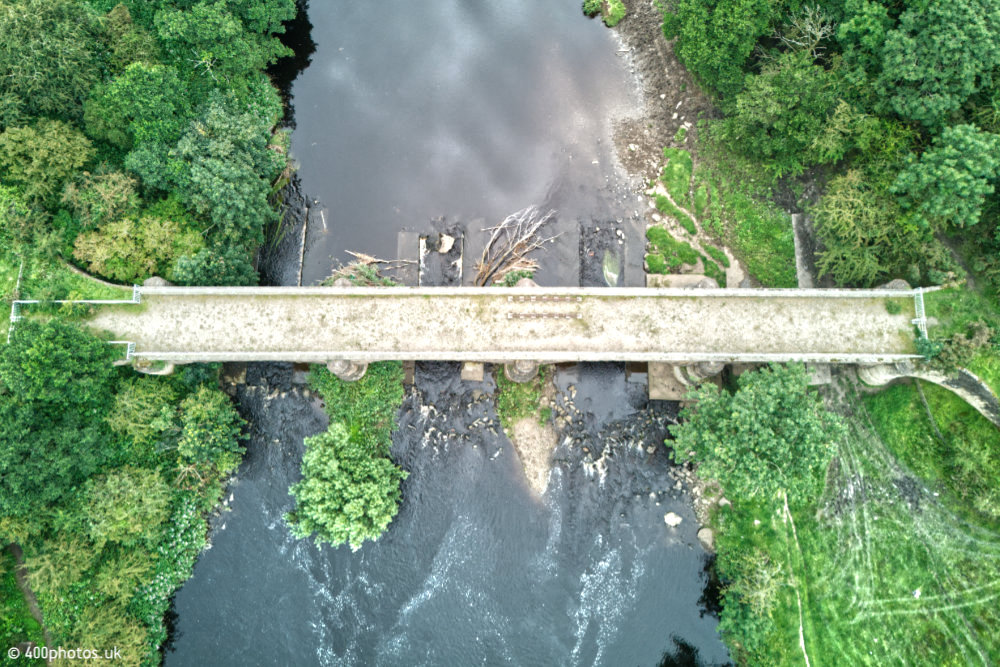
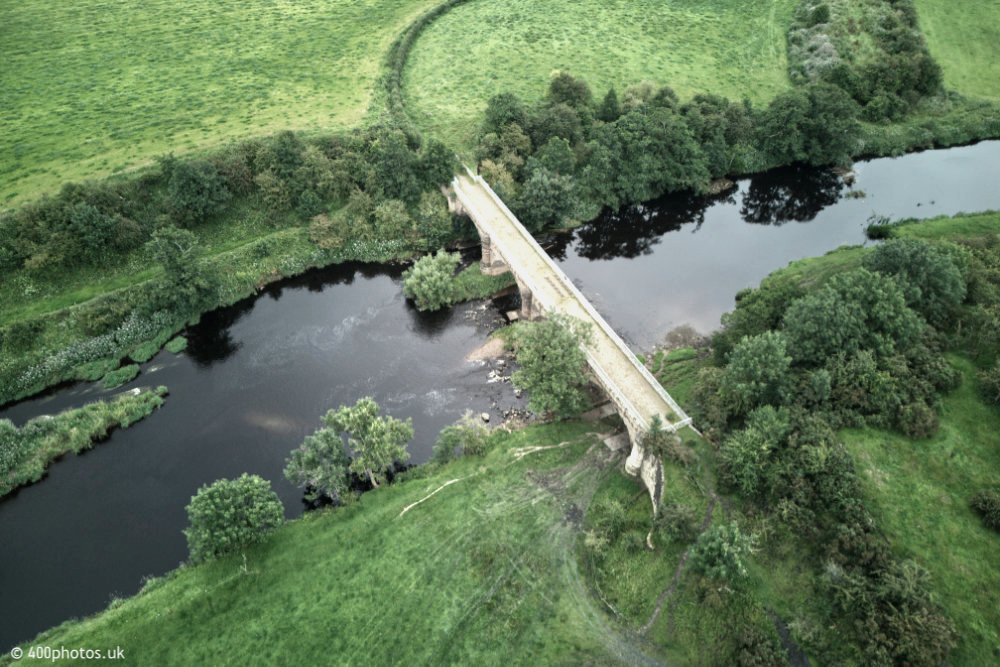
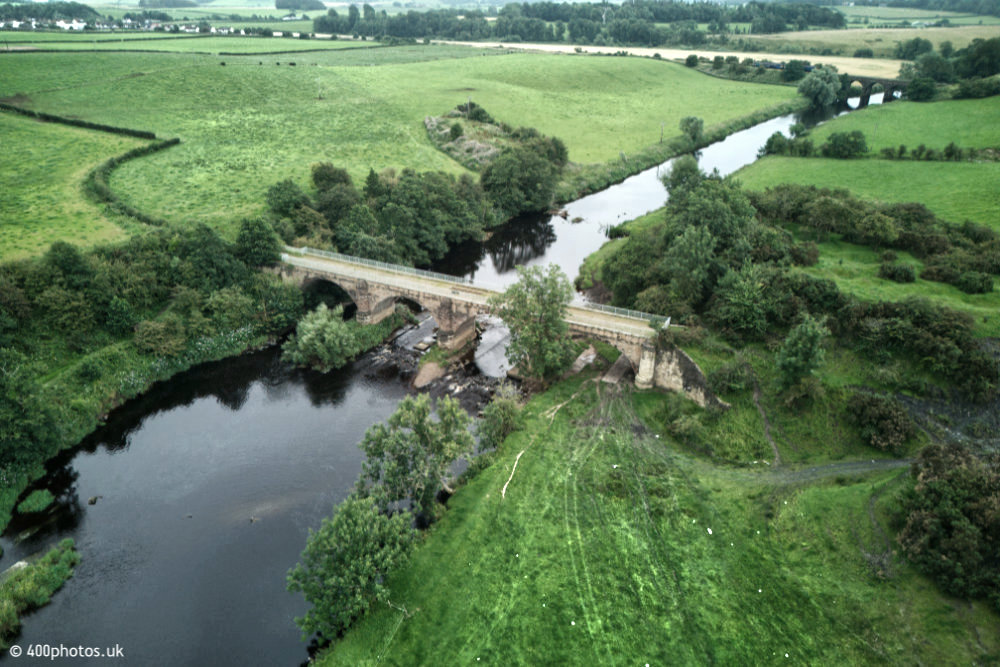
This is the original viaduct on the ten mile trackway built in 1811 by the 4th Duke of Portland
to carry coal from his mines near Kilmarnock to the port of Troon. It takes the track across the
River Irvine and the current line and bridge can be seen upstream in these photos.
Officially titled The Kilmarnock and Troon Railway. This viaduct is the oldest surviving example on a public railway and is often described as the first railway viaduct in the world.
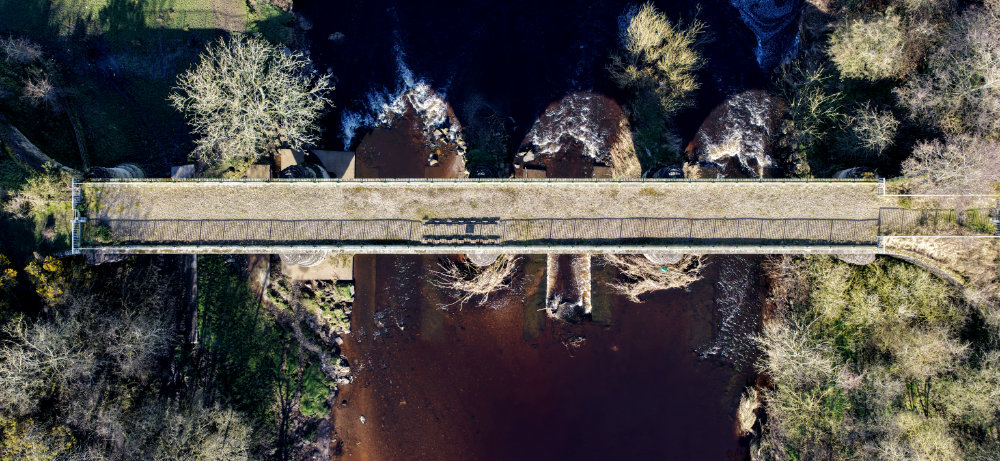
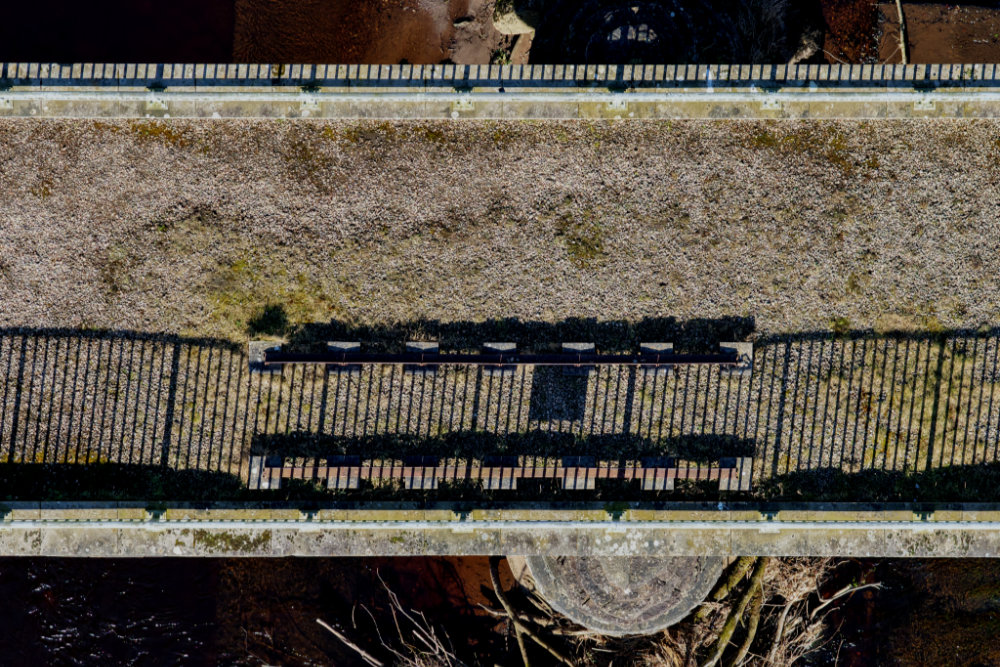
It was in effect a horse-drawn railway (a dry canal?) and was built before reliable steam locomotives were invented. The wagons carrying coal ran between vertical plates rather than on rails, a system that was easier and cheaper to build than conventional railway lines and just as effective at lower speeds. Part of the plateway has been left as a sample.
Although Richard Trevithick had built steam engines before his 1804 locomotive, Robert Stevenson's Rocket wasn't built until 1829, about eighteen years after this plateway was opened.
The viaduct is open to walkers and pedestrians and there's a (rough) path from the old and now derelict Laigh Milton Mill, with parking spaces.
Officially titled The Kilmarnock and Troon Railway. This viaduct is the oldest surviving example on a public railway and is often described as the first railway viaduct in the world.
It was in effect a horse-drawn railway (a dry canal?) and was built before reliable steam locomotives were invented. The wagons carrying coal ran between vertical plates rather than on rails, a system that was easier and cheaper to build than conventional railway lines and just as effective at lower speeds. Part of the plateway has been left as a sample.
Although Richard Trevithick had built steam engines before his 1804 locomotive, Robert Stevenson's Rocket wasn't built until 1829, about eighteen years after this plateway was opened.
The viaduct is open to walkers and pedestrians and there's a (rough) path from the old and now derelict Laigh Milton Mill, with parking spaces.